
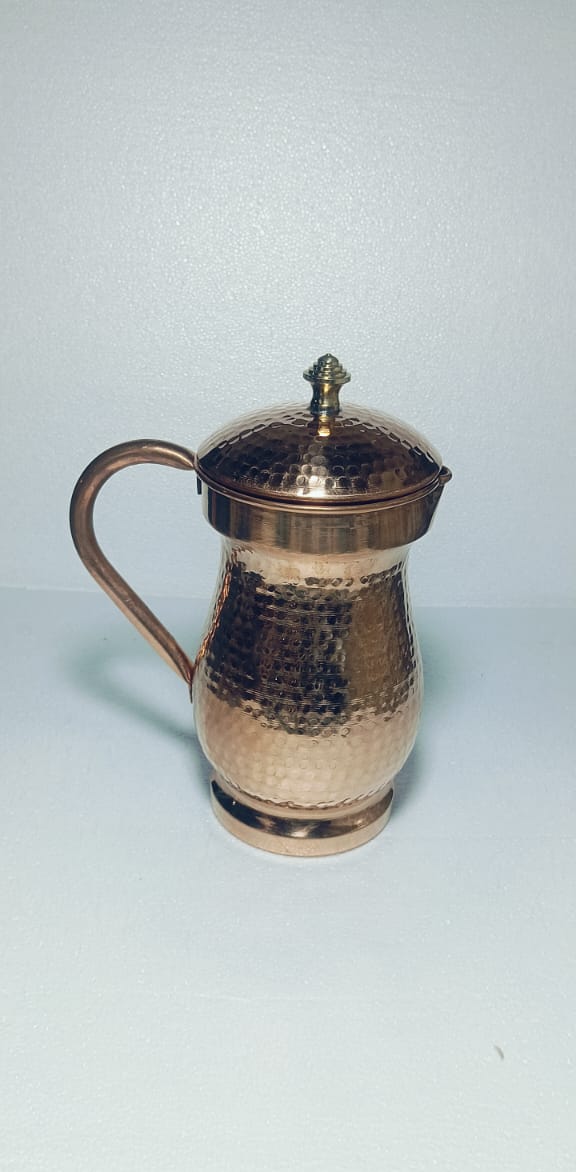
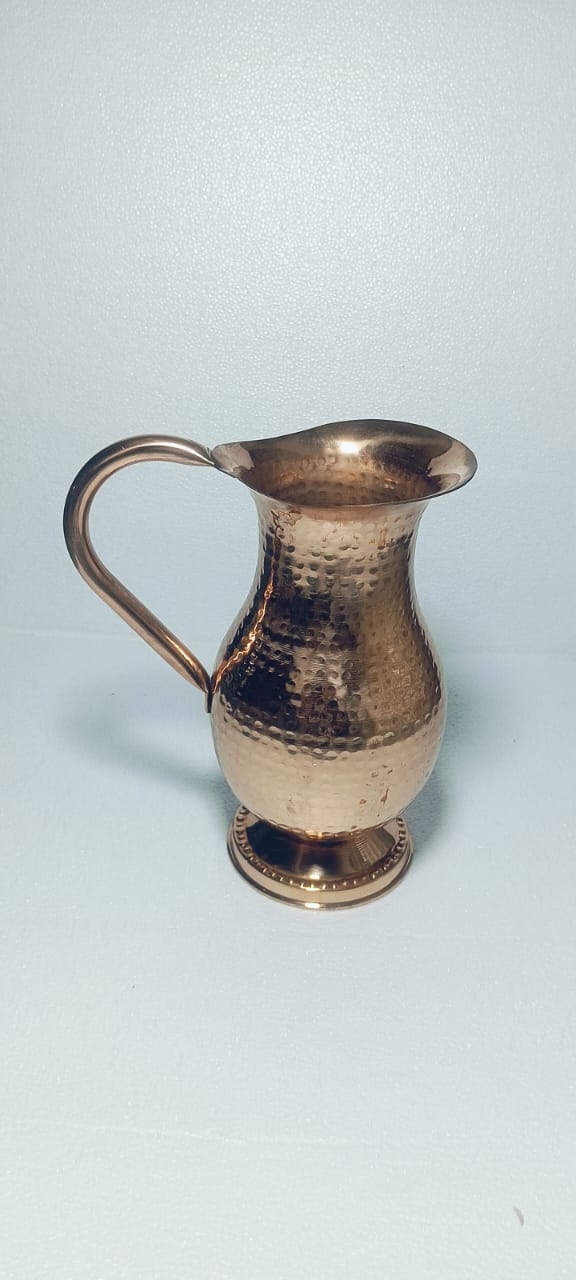
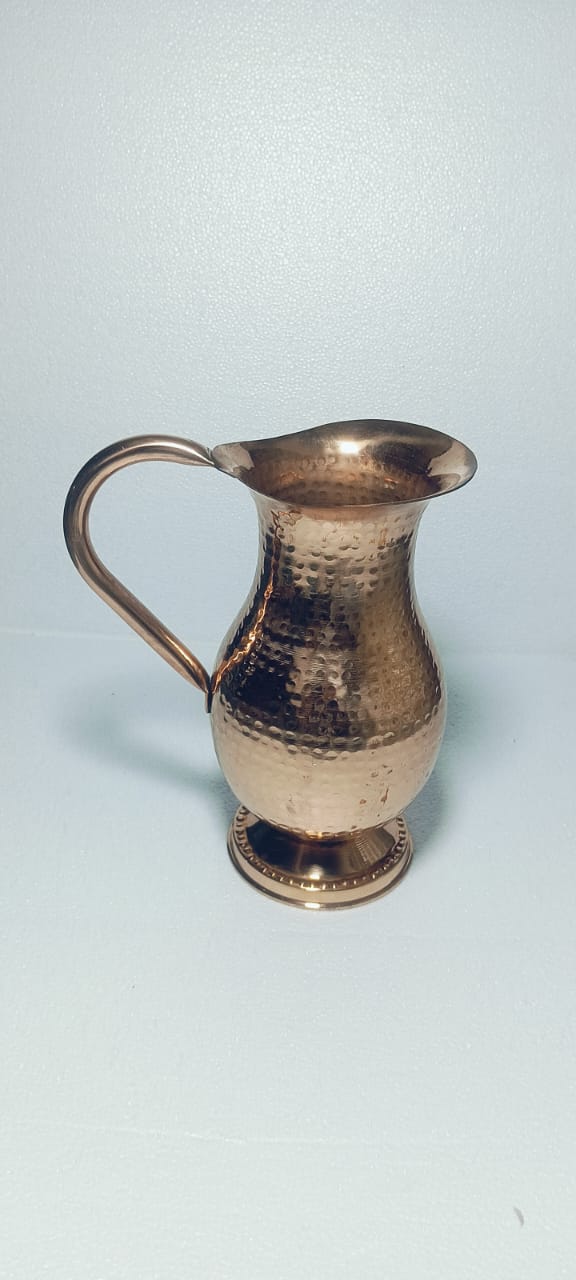
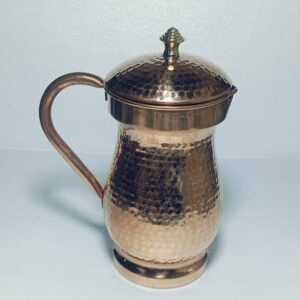
Copper Jug
Original price was: ₹1,170.00.₹1,050.00Current price is: ₹1,050.00.
Material : Copper
Height : 9 inch
Weight : 620 gm
Capacity : 1.5 l
Finishing : Polished
Description
About Copper Jug:
Copper Jugs: Heritage, Health, Use & Care
Copper jugs have been part of human civilization for thousands of years. These elegant vessels combine beauty with utility, offering not only a striking aesthetic but also potential health benefits and rich tradition. This article explores what copper jugs are, their history, advantages and limitations, how to choose, how to use, care & maintenance, and ideas for styling.
What Is a Copper Jug?
A copper jug is a pitcher or container made predominantly from copper, used for storing, pouring, or serving liquids—especially water. Jugs come in various shapes, sizes, and designs: with wide mouths, narrow necks, handles, spouts, lids, sometimes with decorative engravings or hammered textures. Some are plain and functional; others are ornamental, used for display or ritual.
Copper may be used in pure form, or it may be combined with other metals (e.g. copper‑lined, or copper alloyed), but the ones referred to as “copper jugs” are generally made substantially from copper, often with inner linings of more inert metal to prevent strong copper‑taste or reaction.
History & Cultural Significance
Copper has been used since ancient times: in the Indus Valley Civilization, in ancient Egypt, Greece, Rome, and later in many cultures across Asia and Europe. Because copper is relatively abundant and malleable, it was adopted early for making vessels.
Copper jugs were used to carry and store water, milk, wine, oils, and other liquids. They often played roles in religious rituals and traditional ceremonies. In South Asia especially, copper vessels are considered auspicious; water stored overnight in copper containers is traditionally believed to offer health benefits.
In medieval Europe, copper and copper alloys were used in kitchen wares and decorative household items. Copper jugs were placed on hearths, used during banquets, and often given as gifts. Their glossy warm hue symbolized luxury and hospitality.
Today, copper jugs continue to be valued for their aesthetic appeal, artisanal value, and cultural resonance across many societies. The craft of making copper jugs—especially hammered, embossed, or hand‑engraved designs—is preserved by artisans in many parts of the world.
Advantages & Possible Benefits
Copper jugs are popular for a number of reasons. Here are their key advantages.
- Aesthetic appearance
Copper has a warm, rich, reddish metallic sheen that develops a natural glow. Over time it may develop a patina—a soft, aged finish—that many people find charming. Hammered or textured finishes, decorative engravings, ornate handles and spouts add artisan‑appeal. - Thermal properties
Copper is an excellent conductor of heat. In practice, this means liquids in a copper jug will tend to warm or cool quickly. In hot weather, a copper jug can help keep water pleasantly cool if stored in shade. If used for hot liquids, however, handles may heat up, so good design (insulated handles) helps. - Health claims
In many traditional systems of medicine (Ayurveda, for example), drinking water stored in copper containers is thought to have health benefits: improving digestion, killing microbes, balancing bodily elements. Some laboratory studies show copper has antimicrobial properties. While copper is an essential trace element for human health, excess copper consumption can be harmful—so moderation and ensuring safe usage are important. - Durability
Copper is reasonably durable. A well‑made copper jug with good craftsmanship will last many years, even decades, especially if maintained well. It resists corrosion to some extent (though copper oxidizes naturally). Unlike brittle materials, copper can survive knocks, dents, and everyday handling with less risk of breakage. - Eco‑friendliness
As a metal, copper is recyclable. Choosing copper over some plastics or synthetic materials can reduce environmental impact. Also, natural aging and minimal treatment make copper a material many enjoy as sustainable.
Limitations & Things to Be Careful About
While copper jugs have many positives, there are equally some limitations or precautions to be aware of.
- Tarnishing and patina
Copper reacts with air, moisture, and other elements to form a layer of oxidized copper (patina). While some people like the aged look, too much tarnish can show green or brown discoloration. Also, oxidation on the inside can affect taste or appearance. - Copper reactivity / taste change
Storing acidic liquids (lemonade, fruit juices, vinegar, wine) for long in unlined copper may result in leaching of copper ions, which can affect taste and potentially health. For such uses, inner lining (e.g. tin, stainless steel, or food‑safe lacquer) is preferable. - Maintenance requirements
To keep copper jugs looking good and safe, more care is needed compared to stainless steel or ceramic. Polishing, cleaning, avoiding harsh chemicals or abrasives—all these matter. Without maintenance, copper may develop spots, patina in undesired places, or dullness. - Cost
High‑quality copper with artisan detailing tends to be pricier than mass‑produced alternatives. Also, if you want lined copper (to prevent taste change or corrosion), that adds to manufacturing cost. - Weight and heat conduction
Copper can be heavy depending on thickness and size. Also, if the design has no insulating handle, handling hot liquids may be difficult.
How to Choose a Good Copper Jug
When selecting a copper jug for purchase, several factors will help you pick a good one that balances beauty, safety, and usefulness.
- Material & Lining
Choose between pure copper (which may need lining) or copper with food‑safe lining (tin, stainless steel, etc.). Lined jugs reduce risk of copper reacting with acidic substances. - Thickness
Thicker copper tends to be more durable, less prone to denting, and helps moderate temperature changes (slower heat loss or gain). However, very thick copper will cost more and weigh more. - Design & Finish
Decide whether you want polished, hammered, distressed, hand‑engraved, or smooth finish. Handles should be comfortable and safely attached. Spouts should pour neatly without dripping. - Capacity & Shape
Think about how much liquid you usually serve. A jug that’s too large might be unwieldy; too small may be impractical. Also consider shape: narrow neck helps pouring; wide mouth helps filling and cleaning. - Ease of Cleaning
Look for wide mouths, smooth inner surfaces (if lined), fewer crevices, detachable parts if needed. Handles that avoid trapping grime. - Safety & Certification
If possible, check whether the copper jug meets food safety standards. Ensure lining materials are non‑toxic. Avoid lead solder, unsafe paints or chemicals on decorative surfaces. - Artisan vs. Mass‑Produced
Hand‑crafted copper jugs may have character and minor imperfections, which many people value. Mass‑produced ones may be more uniform and cheaper but may lack unique detailing.
Use & Practical Applications
Here are typical uses and good practices when using a copper jug.
- Drinking water
This is the most common use. Storing water overnight in a clean copper jug is traditional in many places. In warm climates, it helps water stay cooler; mineral qualities of copper may provide antimicrobial benefits. - Serving beverages
For non‑acidic beverages (plain water, filter water) a copper jug works well. If serving juice or lemonade, choose a lined jug or transfer liquid before serving. - Decorative & ceremonial use
Copper jugs are often used for décor: as showpieces in kitchens, dining rooms, or as part of traditional rituals, religious ceremonies, or cultural displays. Some are used as flower vases (often with a liner inside), or candle holders (if designed for that). - Gift item
Because of their artisan appeal and heritage, copper jugs are a popular gift: weddings, housewarmings, cultural celebrations. - Outdoor & tabletop uses
In outdoor dining, copper jugs can bring elegance. Just be mindful of exposure to weather, moisture, and desirability of bringing them inside after use to prolong finish.
Care & Maintenance
To keep your copper jug looking beautiful and functioning safely, follow these care and maintenance tips:
Daily / Regular Cleaning
- Rinse thoroughly after each use with warm water.
- Use mild, non‑abrasive dish soap. Avoid strong acidic cleaners, bleach, or harsh detergents.
- Dry immediately with soft cloth to avoid water spots or mineral deposits. Don’t let water sit inside overnight if possible unless it’s intentionally stored water and the jug is clean.
Removing Tarnish & Polishing
- Mix a paste of lemon juice (or vinegar) + salt, or baking soda + lemon / vinegar. Apply gently with soft cloth, rub lightly to bring back shine.
- For lined jugs, be gentle so you don’t damage lining layer.
- Alternatively, use commercial copper polish (make sure it is food‑safe).
- After polishing, wash again, rinse, and dry.
Preventing Green Oxidation & Patina Inside
- If storing water daily, empty and rinse the jug every day, and dry inside.
- For unlined copper jugs, sometimes slight patina inside is unavoidable; cleaning regularly keeps it controlled.
- If liquid is acidic, avoid long storage inside unlined copper.
Handling & Storage
- Avoid dropping, banging or denting—hammered textures hide small dents better.
- Store in cool, dry place; avoid excessive humidity and moisture in air.
- If display only, occasional polishing keeps it shining. If storing, wrap in soft cloth to avoid scratches.
Lining Upkeep (if applicable)
- If inner liner is tin, check for wear or peeling. Tin may need re‑tinning after many years if heavily used.
- If stainless steel inner lining: avoid strong chlorine exposure; clean gently.
- Ensure that lining seams are sealed; if liquid leaks between copper body and lining, that can cause issues.
Safety Considerations
- Avoid using unlined copper for long‑term storage of acidic or alkaline liquids.
- Don’t heat liquids (especially acidic ones) directly in unlined copper jugs unless they are certified for that. High acidity and heat together accelerate copper leaching.
- Only use food‑safe lining materials and solder (if used). Avoid lead or unsafe alloys.
- Clean thoroughly and frequently, because bacteria can grow where moisture stagnates.
Styling Ideas & Decor
Copper jugs are not just practical—they make decorative statements. Here are ways to style them:
- As a centerpiece: A polished copper jug filled with fresh flowers or greenery placed in the dining room or living room adds warmth.
- Kitchen display: On open shelves, hang or place copper jugs along with other copper cookware; their varied shapes create visual interest.
- Rustic or vintage décor: Use hammered or distressed copper jugs in farmhouse or vintage styled kitchens or patios.
- Contrast with textiles: Place copper jug on a tabletop with a cloth runner—dark or cool‑toned fabrics like navy, charcoal, or forest green work well to contrast the warm copper.
- Outdoor settings: Use copper jugs in shade, with simple clean lines; maybe as part of outdoor dining or garden display.
- Gift wrap presentation: If gifting, consider pairing with copper cups, cloth napkins, or cards that emphasize its heritage.
Selecting & Buying Tips
When shopping for a copper jug, whether online or in store:
- Inspect product photos (for online) for seams, dents, lining, finish.
- Read product specifications: capacity, lining material, weight.
- Look for “food‑grade lining” or certification.
- Check customer reviews, especially mentioning durability, reaction (taste), cleaning ease.
- Compare price with craftsmanship: hand‑hammered pieces cost more than stamped or machine‑made.
- If buying local artisan pieces, examine craftsmanship details: uniformity of hammer marks, quality of handle join, design balance.
Sample Product Description Paragraph
Here’s a sample description you might adapt for a product listing or website section:
“Immerse yourself in tradition with this elegant copper jug, handcrafted with a hammered finish that reflects artisan skill and warm tones. Featuring a generous 1.5‑liter capacity, a gently curved spout for drip‑free pouring, and a sturdy copper‑welded handle for balance. The interior is lined with food‑grade stainless steel to ensure flavor integrity and safe storage of water. Ideal for daily use, ceremonial occasions, or as a decorative accent, this jug blends rustic charm with modern functionality.”
Conclusion
Copper jugs remain popular today because they gracefully blend heritage, aesthetics, utility, and possible health benefits. When chosen and cared for wisely, a copper jug can last for generations, serving not only as a practical vessel but also as a beautiful object of design and tradition in your home.
Related products
-
- Sale!
- Copper Jug
Copper Jug
- Original price was: ₹1,200.00.₹1,120.00Current price is: ₹1,120.00.
- Add to cart
Reviews
There are no reviews yet.