
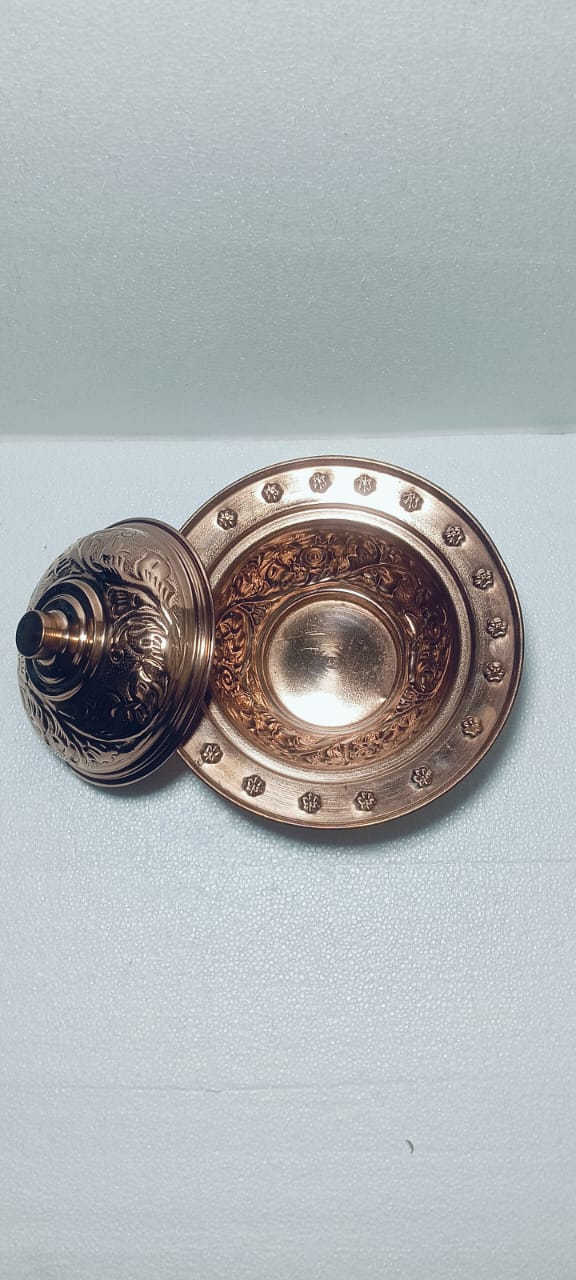
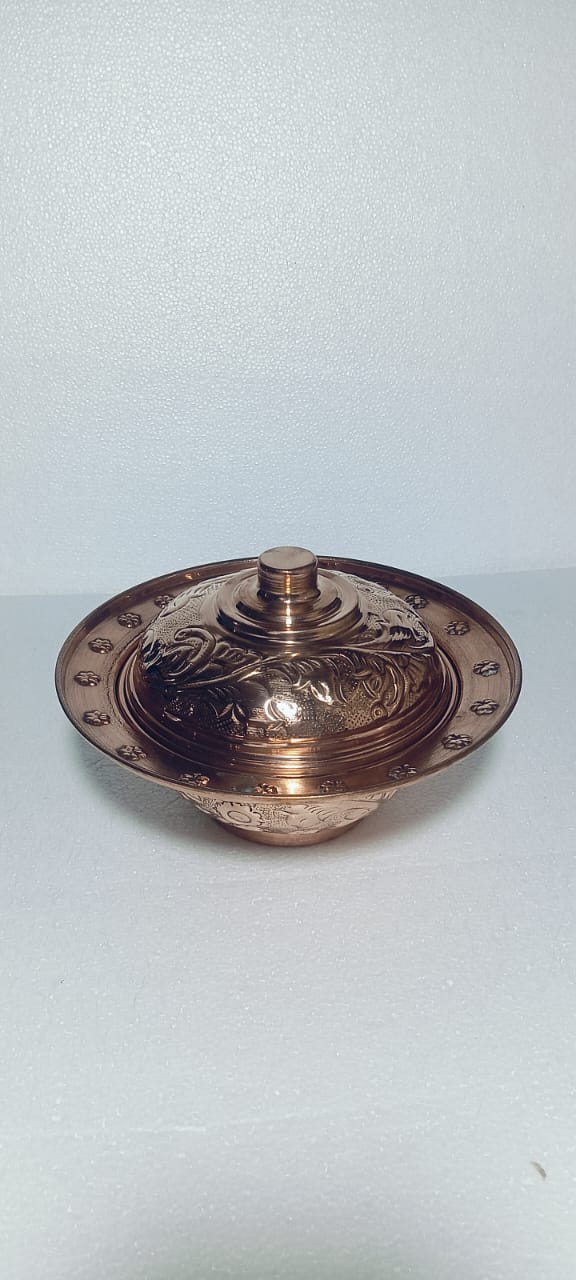
Copper Serving Donga
Original price was: ₹850.00.₹750.00Current price is: ₹750.00.
Material : Copper
Height : 5 inch
Top Diametre : 8 inch
Weight : 440 gm
Finishing : Polished
Description
About Copper Serving Donga:
The Elegance and Utility of a Copper Serving Donga
In the realm of traditional Indian serveware, the copper donga holds a special place. Also known sometimes as a serving “handi,” tureen, or bowl with lid, a donga is a classical vessel often used for presenting hot dishes such as biryani, curry over rice, stews, or gravies. When crafted from copper (or copper-lined), a serving donga combines heritage, aesthetics, and functionality. Here’s a comprehensive look at copper serving donga: its features, history, benefits, uses, care, and buying considerations.
What Is a Copper Serving Donga?
A donga (in Indian kitchen terminology) is a lidded bowl or pot with a wider base and gently sloping or tapering sides—similar in concept to a soup tureen or casserole in Western kitchens. When used for serving rather than cooking, its inner surface is often lined with a more inert metal (like stainless steel) to prevent reactivity with food, while the outer layer remains copper for visual appeal and heat retention.
Modern copper serving dongas often have these layers:
- Outer copper body: polished or hammered copper for beauty and some thermal conduction.
- Inner lining: frequently stainless steel, which is food-safe, nonreactive, and easier to clean.
- Lid with handle: to trap heat and moisture until the dish is brought to the table.
- Handles or “ears”: sometimes on the sides for ease of carrying.
- Optional spoon or ladle: matched serving spoon in a complementary metal.
For example, Indian serveware manufacturers market copper donga with lid designs, detailing hammered outer finish and stainless steel lining to balance the classic look with food safety. (Silkrute)
Historical & Cultural Significance
Copper and its alloys (e.g. bronze, “kansa”) have been used in Indian cookware and serveware for centuries, appreciated both for their utility and ritual aspects. In temples and royal kitchens, metal pots and bowls in copper or brass were used to cook or serve food, partly because copper conducts heat well and also for its auspicious symbolism in many traditions.
The copper donga form itself—serving lidded dishes—has analogues in many culinary cultures (such as the French tureen). In India, however, the donga carries a local identity, especially in thicker, decorative copper forms used in regal or ceremonial dining.
Over time, as pure copper cooking was less widely practiced (because of reactivity and maintenance), the “copper donga” form persisted as a decorative and functional vessel for final presentation—combining old-world charm with modern practicality.
Advantages of Using a Copper Serving Donga
Here are some of the benefits that make copper dongas desirable for serveware:
1. Aesthetic Appeal & Prestige
Copper has a warm, glowing tone that exudes elegance. A polished or hammered copper serving donga instantly becomes a focal point on a dining table, enhancing banquet settings and festive dinners.
2. Heat Retention
Though not as good as cast iron, copper does help in maintaining warmth of served food, especially when combined with a lid. It slows down rapid cooling, so the dish remains warm while being brought to the table.
3. Balanced Safety via Linings
With a nonreactive inner lining (such as stainless steel), food does not come into contact with pure copper. This merges the aesthetic and thermal advantages of copper with the safety and ease of modern metal food surfaces.
4. Durability & Longevity
Well-made copper dongas (with proper care) can last many years, even generations. Copper does oxidize over time, but this can be cleaned or polished back to luster.
5. Versatility in Use
A copper donga works not just for Indian rice and curry dishes, but also for gravies, stews, soups, or even Western casseroles. Its decorative look makes it suitable for formal dinners as well as festive occasions.
Common Uses & Serving Ideas
- Biryani or Pulao: The most classic pairing. A copper donga adds ceremony to presenting biryani or layered rice dishes.
- Curries over rice: Serve curry + rice combinations, letting guests ladle from the vessel.
- Soups, stews, or chowders: In a formal table, a copper donga can act as a soup tureen.
- Ghee, dal, or rasam: Smaller copper dongas or companion bowls can be used for liquid dishes.
- Buffet or banquet settings: Use multiple copper dongas with lids to keep food warm and presentable.
- Fusion cuisine: Use a copper donga for pasta sauces, French stews, or other continental dishes that benefit from the warmth and presentation.
Pair it with complementary serveware (plates, spoons) of matching or contrasting metals (brass, stainless, copper) to keep a cohesive table aesthetic. Also, group odd numbers (3, 5) when using multiple dongas to create pleasing visual arrangements.
Design Variations & Styles
Copper dongas come in many styles, to suit different interior and dining themes:
- Hammered copper finish: The uneven dimpled look adds texture and hides minor scratches.
- Polished / mirror copper: Sleek and luminous, great for formal or minimalistic setups.
- Engraved or repoussé work: Some artisan dongas have decorative motifs, floral or geometric patterns, especially in regional crafts (e.g. Kashmiri copperware). (Natriel)
- Mixed metals: Copper outside, stainless steel inside, with brass or bronze handles or accents.
- Antique or patina finishes: A deliberately aged finish for rustic or vintage looks.
- Stackable or nested sets: A set of two or more dongas that stack for storage.
- Small/Medium/Large sizes: From single servings (≈ 500 ml) up to large 2–3 liter sized ones for banquet use.
Some modern sets combine copper with steel in the same vessel, as seen in many commercial listings. (INDIAN ART VILLA)
How to Choose a Good Copper Serving Donga
When selecting a copper donga, consider the following factors:
1. Quality of Copper & Thickness
Thicker copper walls reduce warping and improve longevity. Too thin a copper shell might dent or deform easily.
2. Lining Material & Integration
Prefer models with full, seamless inner linings (stainless steel or food-safe metal). Avoid copper donga designs where lining is loosely attached or incomplete.
3. Fit of Lid & Sealing
A well-fitting lid is important to retain heat and moisture. The lid should sit snug but be easy to remove.
4. Handles / Ears & Balance
Handles should be sturdy, well-attached, and ergonomically placed so the vessel can be lifted even when full. Side handles help in safe carrying.
5. Surface Finish & Craftsmanship
Look for even polishing, minimal seam lines, smooth edges, and clean joins. Hammered finishes may show variations, but the workmanship should be even.
6. Size & Capacity
Choose a copper donga size appropriate for the number of servings. A small donga (≈ 1 L) might suffice for 2–4 people; larger ones (3–4 L) are better for gatherings.
7. Manufacturer Reputation & Origin
Handcrafted copperware from known artisan workshops often ensures better craft and quality control. Handmade options from heritage crafts regions (such as parts of India) are desirable.
8. Price vs Value
Good copper serveware is an investment. Very cheap pieces may skimp on lining or thickness. Evaluate balance of aesthetics, usability, and durability.
Care, Maintenance & Safety Tips
A copper donga needs regular care to stay beautiful and functional.
Cleaning & Polishing
- Use mild dish soap and warm water to wash the lining (stainless steel part). Avoid abrasive cleaners.
- To clean the outer copper, you may use a paste of lemon juice plus salt or vinegar plus salt. Rub gently, then rinse and dry. This helps remove tarnish (verdigris).
- Soft microfiber cloths are preferable for drying and keeping shine.
- For engraved or textured surfaces, use a soft brush (e.g. toothbrush) to clean crevices.
- Avoid leaving acidic foods (tomato, tamarind, vinegar) in contact with bare copper for long durations—even for serving.
Preventing Tarnish & Patina
- After cleaning, you may apply a thin coat of food-safe mineral oil or beeswax to slow oxidation.
- Store in a dry place. Avoid moisture accumulation.
- Occasional polishing will restore luster.
Usage Safety & Best Practices
- Never heat food directly in an unlined copper donga—copper reacts with many foods.
- If the inner lining is stainless steel, it is safe for food contact and cooling.
- When serving very hot liquids, handle with caution—metal conducts heat.
- Avoid dropping or banging the vessel—copper is malleable and can dent.
- Inspect lids and handles periodically for looseness and tighten if necessary.
Potential Downsides & Mitigation
While copper dongas are beautiful, there are a few cautions to keep in mind:
- Cost: Good copper- and lining-quality pieces tend to be more expensive.
- Maintenance effort: They require regular cleaning and polishing versus totally maintenance-free serveware.
- Weight: A heavy copper donga with contents can be quite heavy—choose sizes accordingly.
- Reactive nature of copper: Without a proper lining, copper can react with some foods (acidic, salty), altering taste or causing small copper salts—hence the importance of a good lining.
- Oxidation: Over time, copper oxidizes; if left unchecked, it may dull.
To mitigate these, always choose lined designs, avoid direct heat use, and maintain with care.
Sample Use Case: Serving a Grand Biryani
Imagine setting a festive table. At the center, you place a glowing copper donga filled with steaming biryani. The lid is lifted amid excited anticipation, and aromatic steam drifts out. Guests dip into the fragrant rice, as the copper vessel maintains warmth. On either side, matching copper bowls hold raita and salad. The gleam of the copper and the visual appeal elevate the entire meal from ordinary to ceremonial.
The donga thus is not just a practical container—it becomes part of the dining experience, adding tradition, elegance, and warmth.
Conclusion
A copper donga is a refined fusion of tradition and functionality. By combining a decorative outer copper shell with a protective inner lining, it brings to your table both aesthetic charm and safe utility. Whether used for serving biryani, curries, soups, or any dish you wish to present elegantly, the copper donga invites a sense of ceremony.
When choosing one, always weigh craftsmanship, materials, lid design, handles, and ease of maintenance. With proper care, a copper donga can become a cherished heirloom in your kitchen or dining set. It’s not just a serving vessel—it’s a statement of heritage and taste.
Related products
-
- Sale!
- Kitchen
Copper Suger Pot
- Original price was: ₹750.00.₹730.00Current price is: ₹730.00.
- Add to cart
-
- Sale!
- Kitchen
Copper Plate
- Original price was: ₹520.00.₹425.00Current price is: ₹425.00.
- Add to cart
-
- Sale!
- Kitchen
German Silver Teapot Set
- Original price was: ₹2,300.00.₹2,200.00Current price is: ₹2,200.00.
- Add to cart
Reviews
There are no reviews yet.