
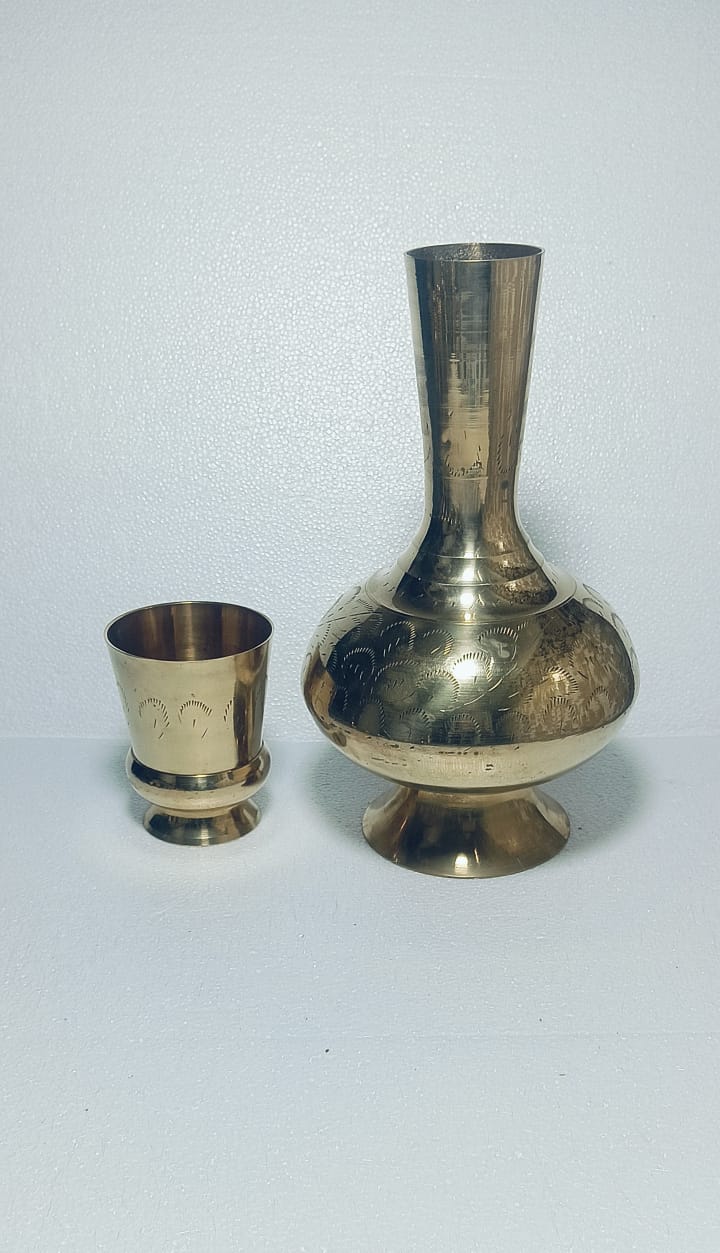
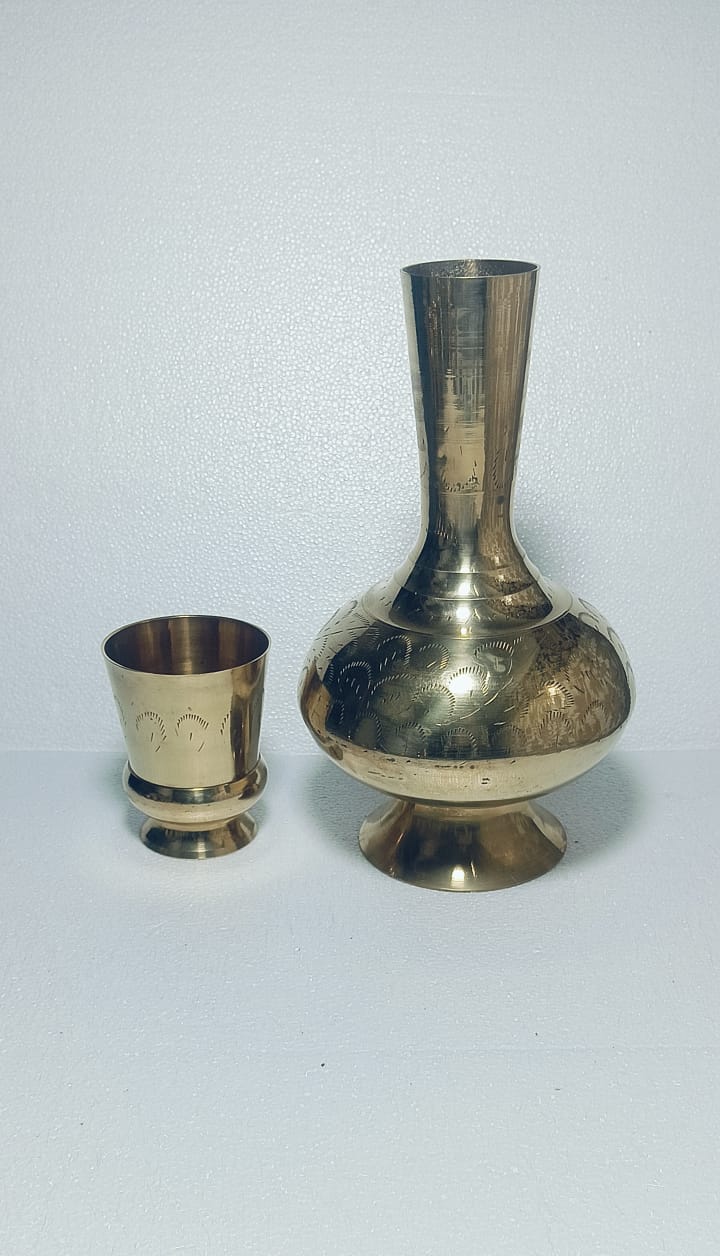
Brass Surahi With Glass
Original price was: ₹1,050.00.₹950.00Current price is: ₹950.00.
Material : Brass
Height : 11 inch
Weight : 640 gm
Finishing : Polished
Description
About Brass Surahi:
Brass Surahi: Tradition, Craftsmanship, and Timeless Beauty
Introduction
The Surahi is more than just a vessel—it is a symbol of tradition, elegance, and function. Crafted from brass, a Surahi represents centuries of craftsmanship, practical use, and cultural significance in South Asia and beyond. From cooling water in hot climates to being a decorative showpiece, the brass Surahi blends utilitarian purpose with artistic expression. In this article, we explore what makes a brass Surahi special: its history, design elements, uses, care, and how to present it attractively on your website.
What Is a Surahi?
A Surahi (also spelled Surha, Surahi, or Aftaba, depending on region) is a jar or pitcher type vessel, traditionally used for storing and serving water or other liquids. It typically has a globular body, a long slender neck, and sometimes a narrow mouth or spout. In many cases, the neck flares into an opening designed for pouring or for inserting a spout/lid. Historically, Surahis were made from clay, copper, or brass; brass Surahis, in particular, are valued for durability, aesthetics, and certain believed health and cooling properties.
Brass is an alloy of copper and zinc; it takes a golden‑shine, is strong yet workable, and when well‑made, gives a Surahi a lustrous finish, ornate detailing, and resistance to corrosion if properly maintained.
Historical & Cultural Significance
- Heritage & Tradition: The Surahi has deep roots in South Asia, particularly in India, Pakistan, and surrounding regions. It features in historical texts, traditional households, and in royal courts as vessels for drinking water, sherbet, rose‑water, or cooling drinks. Its shape and design reflect influences from Persian, Mughal, and local folk traditions.
- Symbol of Hospitality: Offering water, especially in hot weather, is a sign of care and hospitality. A crafted brass Surahi often symbolizes warmth, welcome, and elegance in presentation.
- Artisan Craft: The making of a brass Surahi is often a skilled craft, involving metal shaping, engraving, etching, sometimes inlay or decorative motifs. The finishing, polishing, and any ornamental detail denote the artisan’s skill and the cultural aesthetic of the region.
Design, Shapes & Decorative Features
A brass Surahi may exhibit a wide variety of design styles and features. Key aspects include:
- Body and Neck Shape
- The body tends to be rounded, bulbous, or slightly tapering. This allows good capacity while maintaining stable base.
- The neck is often long and narrow, possibly flaring at the mouth. In some designs, there’s a spout for pouring.
- Mouth / Spout & Lid
- Some Surahis include a lid fitted over the neck to prevent dust, insects, or debris entering.
- Spouts may be simple flared rims or more crafted pouring lips.
- Handles / Grip
- Traditional Surahis might have no handle, relying on neck grip. Some modern or decorative ones have one or more side handles.
- Ornamentation & Finish
- Etching, engraving, carving: floral, geometric, paisley, kalam, vegetal or Islamic motifs.
- Relief work: raised or carved patterns.
- Surface finish: polished bright brass, antique or aged patina, or sometimes lacquer‑coated to slow tarnish.
- Proportions & Dimensions
- Sizes vary: small tabletop pieces might be 20‑25 cm in height; larger Surahis can be 40 cm or more.
- Width of body, diameter of neck/mouth are important to note for usability.
- Material & Construction
- Solid brass or brass sheetwork; some thicker pieces may show hammering or hand‑worked texture.
- In some antique or vintage pieces, efforts to preserve original patina or oxidised finish are prized.
Practical & Decorative Uses
Brass Surahi serve multiple roles in modern homes and decor. Here are common ways people use them:
- Water Storage & Serving: Traditional use. In some beliefs, storing water in brass imparts a cooling effect and may have mild antimicrobial properties. Even if not scientifically definitive, many users appreciate the ritual and sensory feel.
- Beverage Jug: For serving sherbets, juices, or cold drinks during gatherings. The graceful form adds elegance to table setting.
- Decorative Accent / Centerpiece: Alone or with flowers, stands, fairy lights, or in elevated niches. Its metal sheen and detailed work make it a focal point in decor.
- Gift & Heirloom: Surahis are often given as gifts (housewarming, weddings, anniversaries) because they combine beauty and utility, and can be passed down generations.
- Cultural & Ritualic Objects: In ceremonies, festivals, or religious functions; water from the Surahi might be used for rituals; ornamental Surahis are displayed.
Health, Practical & Functional Considerations
To help customers make informed decisions, you can include details on:
- Material Safety: Pure brass can oxidize; certain surfaces might require sealing or proper coating. If water is stored, internal surfaces ideally should be clean and free of harmful coatings or lead.
- Cooling Properties: Because brass conducts heat, it can help keep water cooler than other materials in warm climates, especially if the vessel is thick and stored in shade.
- Weight: Bigger or thicker brass Surahis are heavy. Handling needs care; consider how easy it is to lift when full.
- Capacity & Size: Give clear capacity (litres/millilitres) and physical dimensions (height, body diameter, mouth/spout width), so users know how much it holds and whether it suits their use.
- Finish Durability: Polished surfaces show fingerprints and require more maintenance. Antique or patinaed finishes may hide small wear better. If lacquered or coated, note how to treat that coating (cleaning, avoid abrasives).
Care & Maintenance
Keeping a brass Surahi in good shape and preserving its beauty requires attention to cleaning and storage.
Do’s:
- Wash with mild soap & warm water; rinse thoroughly.
- Dry immediately with soft cloth to prevent water spots or oxidation.
- Polish occasionally using a brass‑safe polish or a cloth with natural cleaners (e.g. lemon juice plus salt, or diluted vinegar) to bring back shine, if desired.
Don’ts:
- Avoid harsh abrasives or scouring pads which can scratch the brass or remove decorations.
- Don’t leave water standing for long periods without renewing; stagnant water may lead to internal tarnishing or odor.
- Avoid exposure to acidic liquids (lemon, vinegar, etc.) left in contact with brass surfaces for long duration.
- Avoid using metallic cleaning agents not meant for brass or applying over decorative enamel or inlay work.
Storage Tips:
- Store in dry, cool place away from direct sunlight which may fade patinas or coatings.
- If stacking multiple pieces, use soft padding between them to prevent scratches.
- If sealed or lacquered, check if coating needs reapplication or gentle care to preserve it.
How to Describe Brass Surahi to Customers (Product Listing / Website Content)
When you are writing your product headline and description, here are key points to include so customers understand what makes your Surahi special:
- Product Name / Headline
e.g. “Handcrafted Brass Surahi with Ornate Engravings”, or “Large Traditional Brass Water Jug – Signature Surahi”. - Key Material & Craft Technique
Mention solid brass, hand‑etched/engraved, antique finish, patinaed brass, with lid or spout, etc. If there’s inlay, enamel, or other decorative work, mention that. - Size & Capacity
Provide dimensions (height, width/diameter, mouth/spout size) and if possible capacity (litres or ml). Knowing how much liquid it holds and how high/tall it is helps buyer visualize. - Uses / Functionality
Suggest how it can be used: for serving water, as decorative item, gift, ritual piece, or centerpiece. Tie into lifestyle benefits: hospitality, tradition, home décor. - Finish & Authenticity
Mention whether finish is polished, antique, lacquered, or raw brass. If artisan‑made, include that. If vintage, age or origin can add value. - Care Instructions
Include cleaning advice (hand wash only, dry immediately, polishing guidance), safety (food contact if relevant), storage tips. - Cultural / Emotional Appeal
Stories or heritage details help: “Inspired by Mughal design”, “Made by traditional craftsmen”, “Echoes of old‑world hospitality”, etc. These connect with customers on more than just function.
Sample Descriptive Content (for a Product Page)
Here’s a sample product description you might adapt:
Product Name: Majestic Hand‑Etched Brass Surahi
Overview: This handcrafted brass Surahi brings together utility and timeless elegance. Fashioned from solid brass, it features a globular body, slender neck, and a flared mouth for graceful pouring. The surface is delicately engraved with floral and geometric motifs, delivered in antique patina that deepens with age.
Dimensions & Capacity: Height approximately 35 cm, body diameter 18 cm, holds about 1.5 litres.
Uses & Placement: Perfect for serving chilled water or sherbet, or as a decorative centrepiece on dining tables, console shelves or in a heritage decor vignette. Works beautifully in both rustic and classic interiors.
Finish & Care: Finished with a protective polish to retain the glow. Clean by hand with mild soap; dry immediately. Avoid abrasives. For long‑lasting beauty, polish occasionally or gently restore patina as preferred.
Why Choose This Surahi: Because this piece is made by artisans, each one has its own unique details. It’s not only a functional jug but also a piece of craftsmanship, carrying forward a legacy of design, serving both your utility and aesthetic aspirations.
Styling & Display Ideas
To help buyers imagine how to style a Brass Surahi in their spaces, you could suggest:
- Use as Vessel for Flowers: Place fresh blooms in glass or water inside the Surahi (if appropriate) for a dramatic arrangement.
- Accent on Shelves or Consoles: Pair with wooden trays, small artefacts, candles, or books. The brass colour complements warm wood, stone textures, or carved furniture.
- Orientation & Lighting: Position under soft lighting to bring out engravings and metallic sheen. Shadows of engraving become more visible with side light.
- Group with Related Pieces: Combine Surahis of different sizes, or with brass bowls, trays or pots for a curated collection look.
- Seasonal Decor: During festivals, fill it with decorative fillers (flowers, coloured sands, fairy lights) or integrate into centrepieces.
Price & Buying Considerations
For customers, including some guidance helps them judge value and make decisions:
- Price influences: Size, quality of brass (thickness, purity), level of ornamentation (simple vs detailed engraving), finish (polished vs antique vs lacquered), vintage vs new, artisan vs mass‑produced.
- Authenticity: If artisan‑made, mention origin; whether designs are traditional regional patterns; whether material is solid brass vs brass‑plated or mixed metal.
- Shipping and Handling: Because brass is heavy and fragile if handled roughly, packaging and shipping need care. Mention how packed, weight, shipping costs, etc.
- Returns & Warranty: If possible, offer transparency: what happens if the surahi arrives dented / scratched, etc. Guarantee quality or offer refund / replacement options.
Conclusion
A Brass Surahi is a remarkable object: a convergence of art, history, and purpose. It holds more than water—it carries cultural symbolism, aesthetic beauty, and craftsmanship. Whether someone seeks to use it daily, present it during gatherings, display it as décor, or gift it to a loved one, a well‑made brass Surahi delivers value in many dimensions.
By highlighting its material, design, size, cultural roots, care, and stylistic potential, you can present a Brass Surahi on your website not just as a product, but as a story—honouring tradition, celebrating artistry, and offering elegance in everyday life.
Related products
-
- Sale!
- Kitchen
Copper Serving Donga
- Original price was: ₹850.00.₹750.00Current price is: ₹750.00.
- Add to cart
-
- Sale!
- Kitchen
Copper Thali
- Original price was: ₹1,450.00.₹1,350.00Current price is: ₹1,350.00.
- Add to cart
-
- Sale!
- Kitchen
Copper Plate
- Original price was: ₹270.00.₹250.00Current price is: ₹250.00.
- Add to cart

Reviews
There are no reviews yet.