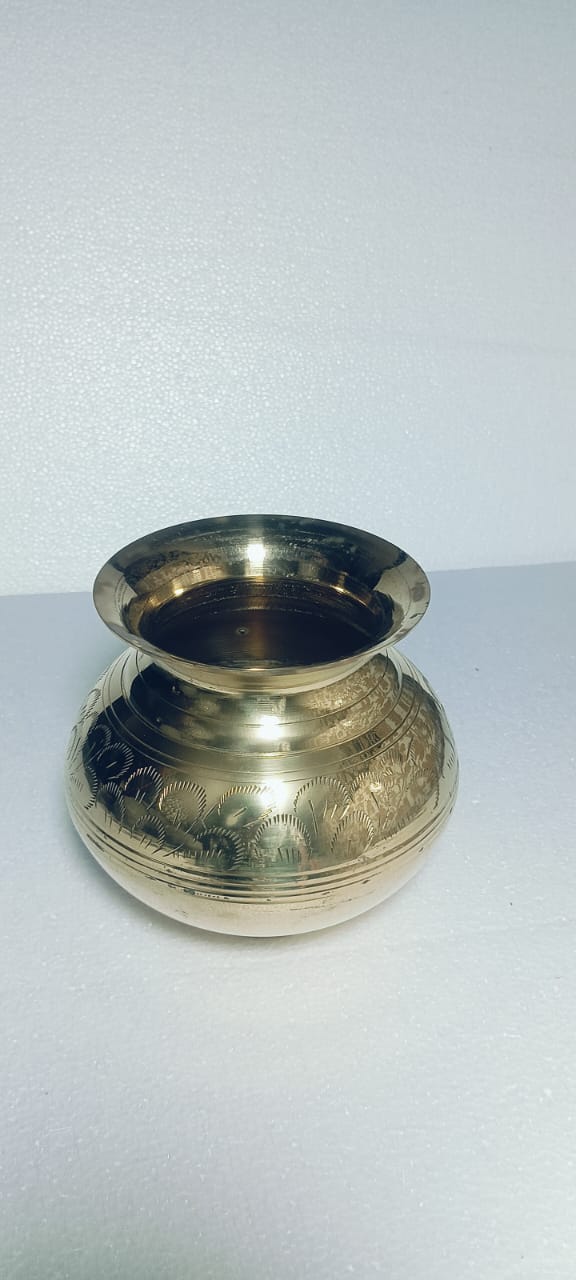
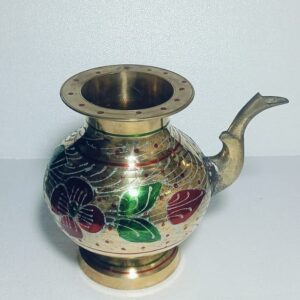
Brass Kalash
Original price was: ₹640.00.₹550.00Current price is: ₹550.00.
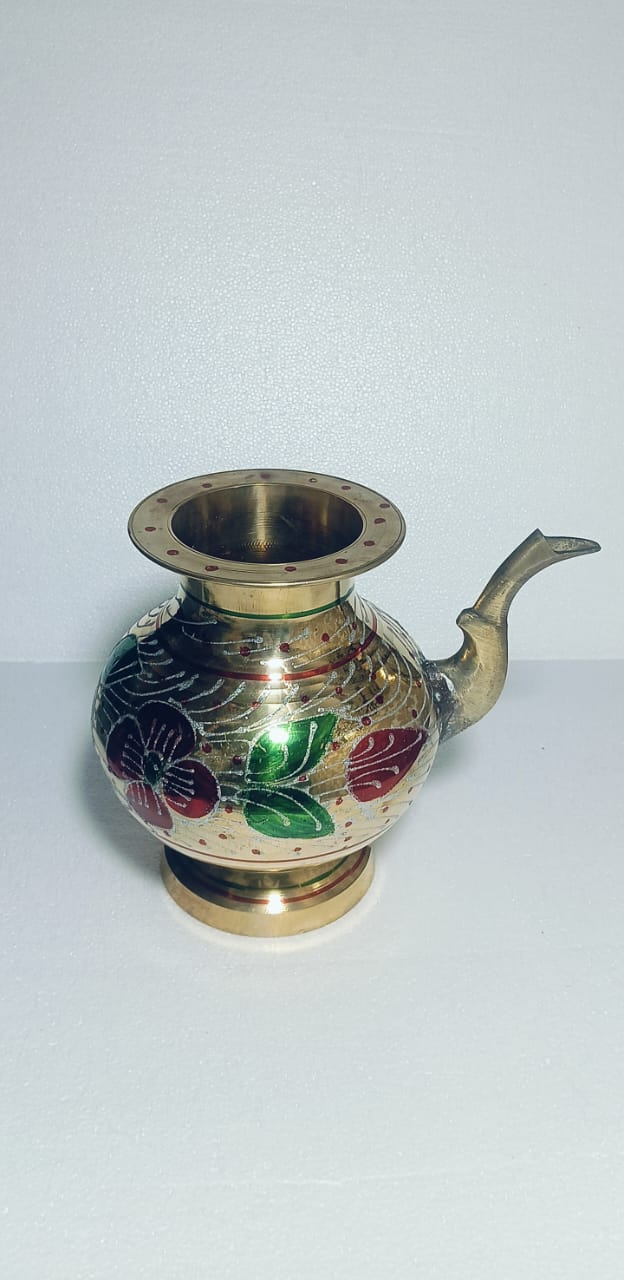
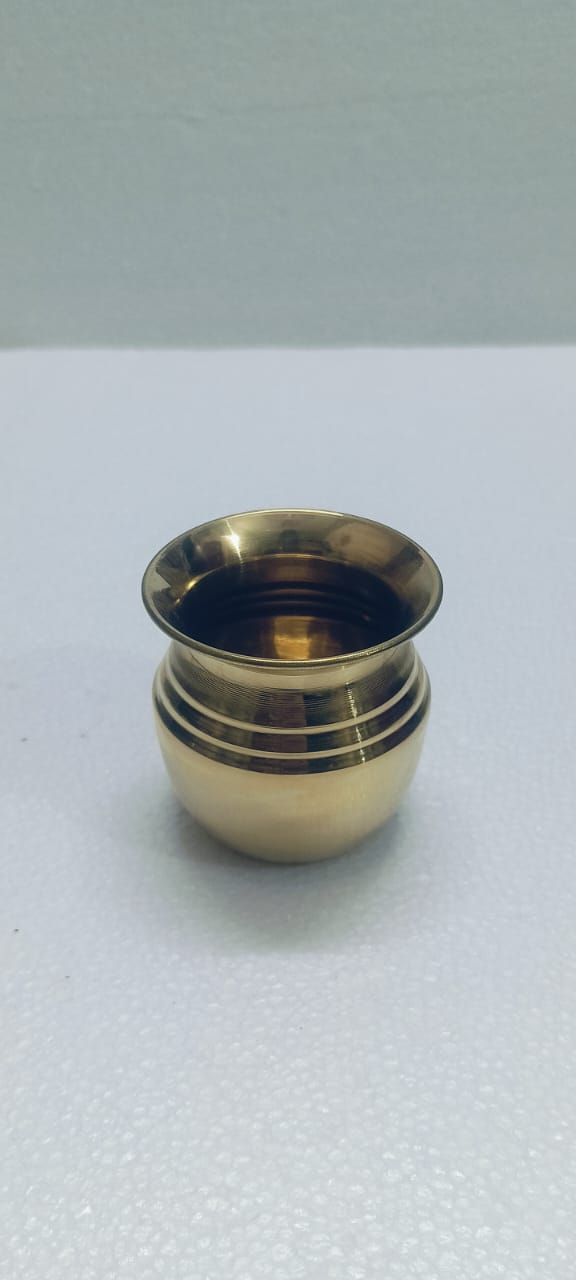
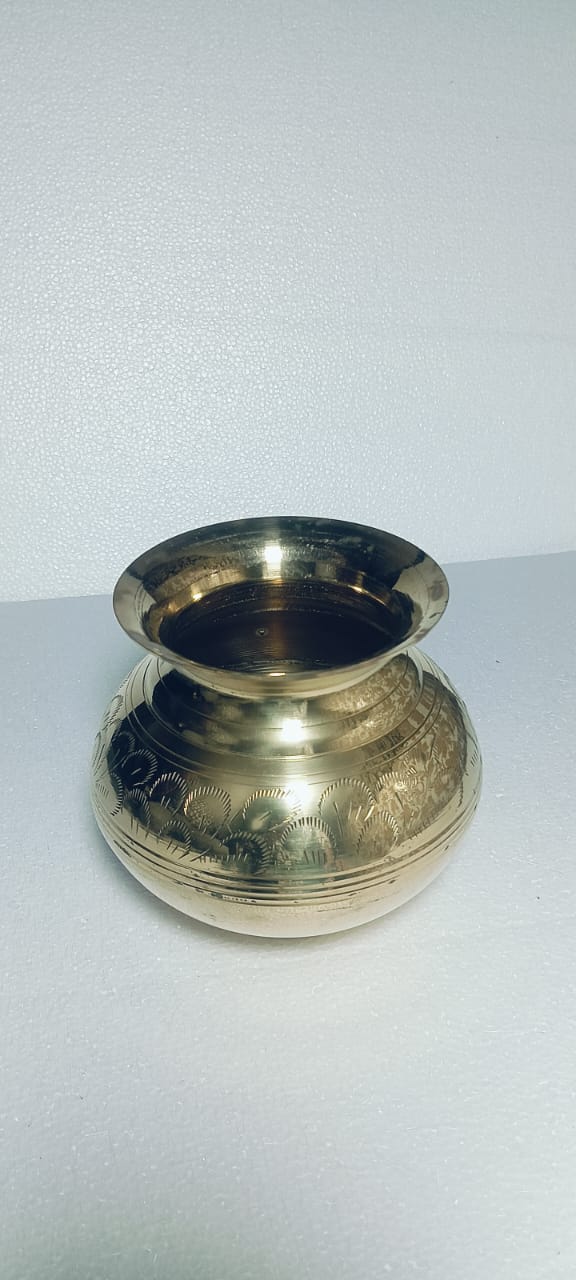
Material : Brass
Height : 13 cm
Top Diametre : 11 cm
Capacity : 750 ml
Finishing : Polished
Description
About Brass Kalash:
Brass Kalash: Symbolism, Tradition, Craft & Care
The Brass Kalash—also spelled Kalasa, Kalasham, Kudam or Kalasham in various Indian languages—is a sacred vessel made of brass that holds deep ritualistic, cultural, and spiritual significance in the Indian subcontinent. More than just a physical object, it embodies purity, abundance, auspiciousness, and the confluence of the material and divine. In this article, we will explore the origins and meaning of the Kalash, its design and materials (especially brass), traditional uses, how to choose a quality brass Kalash, maintenance and safety, and how it can also function as decor or gift item.
What Is a Kalash?
A Kalash is a metal pot or vessel, often with a rounded base and a narrow neck or mouth, used in Hindu, Jain, and Buddhist ceremonies. Traditionally, a Kalash becomes a Purna‑Kalasha or Purna‑Kumbha (meaning ‘full vessel’) when it is filled with water (or other sacred contents), topped or crowned with mango leaves (or betel leaves), and with a coconut placed on top. Sometimes the pot is also filled with rice, grains, coins or gems to symbolize prosperity. (Wikipedia)
The Kalash holds symbolic layers: the pot itself representing earth (material world), the water inside symbolizing life or primordial waters, the leaves representing life, the coconut or top representing spiritual realization or the divine. The entire arrangement is used to invite positive energy, purify environments, mark auspicious beginnings such as weddings, house‑warmings, temple inaugurations, festivals like Navratri, Diwali etc. (Vedic Vaani)
Why Brass as the Material?
Brass is an alloy of copper and zinc. Its use for religious vessels (like the Kalash) is traditional and carries several benefits:
- Purity & Durability: Brass is sturdy, resists wear, and when well‑made, gives a long life. Many brass Kalash items are thick, finely polished, and durable. (tangerineindia.com)
- Shine & Aesthetic Appeal: Brass has a warm golden hue, which, when polished, radiates a sheen that is visually pleasant and considered sacred in many traditions. The reflective quality adds to the sense of sanctity in ritual settings. (Giri Trading Agency Private Limited)
- Cultural Tradition: Brass has been used historically in temples and homes for sacred vessels, because of its stability and traditional sanctity. (Wikipedia)
- Ease for Ritual Use: Brass conducts heat less than pure copper, is easier to maintain (when properly cared for), and is relatively affordable compared to precious metals like silver or gold.
Components & Design Features of Brass Kalash
A well‑designed brass Kalash typically includes the following elements:
- Pot shape: Round or bulbous base, tapering neck or “mouth”. Sometimes a disk base or pedestal. Broad bottom ensures stability. (Giri Trading Agency Private Limited)
- Mouth opening: Wide enough to insert a coconut or leaves; yet narrow enough to support and keep them balanced atop.
- Neck / Thread: A sacred thread or “mauli/kalawa” is often tied around the neck. This thread has ritual importance. (Vedic Vaani)
- Decoration: Some Kalash are plain brass; others are adorned with engravings, embossments, motifs of deities, floral designs, religious symbols. (IndianShelf)
- Size and Capacity: Varies from small ones for home prayer‑rooms, to large ones used in temples or for grand rituals. Capacity determines how much water or other offerings are held. (tangerineindia.com)
Symbolism & Traditional Significance
Understanding why Kalash plays such a key role in rituals helps appreciate its importance.
- Symbol of Creation & Life: The filled pot (water inside) is sometimes seen as representing the primordial waters from which life and creation emerged. The Purna‑Kalasha becomes a microcosm of creation. (Wikipedia)
- Abundance & Prosperity: Leaves, coconut, grains, coins in the Kalash signify fertility, prosperity, material and spiritual wealth. It is believed to bring blessings. (Giri Trading Agency Private Limited)
- Auspicious Beginnings: During ceremonies like weddings, housewarming (griha pravesh), puja foundation stones, festival inaugurations, the Kalash is installed or kept to bestow positive energy. (tangerineindia.com)
- Ritual Purification: Water from the Kalash is considered sacred and is used for sprinkling, consecration (Abhisheka), sanctifying spaces or objects. (Vedic Vaani)
- Symbolic of the Five Elements (Pancha Bhootas): The pot (earth), the water, the neck/opening, the leaves (air), coconut or covering (ether) are interpreted in some traditions to represent balance of nature. (The Times of India)
Traditional Uses & Rituals
Brass Kalash is used in many contexts. Some of the common ones are:
- Puja & Daily Worship: In homes and temples, Kalashes are placed on the puja altar filled with water, leaves, coconut, maybe decorated. Used in daily rites & offerings.
- Festivals & Special Ceremonies: Navratri, Diwali, Ganesh Chaturthi, Lakshmi Puja, etc. Also during Karwa Chauth, weddings, engagement, housewarming ceremonies. (paramparabharat.com)
- Kumbh Abhishekam (Consecration): During temple consecration ceremonies, many Kalash vessels are used; sacred water is poured from them over the temple spire or idol. (Wikipedia)
- Welcoming & Entrance Use: In some traditions, a Kalash is placed at the entrance of the house as welcome—invoking blessings for whoever enters. Sometimes with rice or flowers around. (tangerineindia.com)
- Gift & Decorative Object: A beautifully crafted brass Kalash makes for a meaningful gift—for weddings, festivals, or housewarming. Also used as a decorative object in interior design, sometimes without ritual use. (IndianShelf)
How to Choose a Quality Brass Kalash
If you are buying a Brass Kalash, these tips help to ensure you get an item both spiritually meaningful and physically lasting.
- Material Quality: Look for good quality brass—ideally thick enough, with uniform finish, no thin weak spots. Brass with proper alloy (copper‐zinc) and minimal impurities.
- Weight & Balance: A heavier, well‑balanced Kalash tends to feel more substantial, reassuring. The base should be wide enough for stability.
- Finish & Craftsmanship: Smooth or nicely hammered/exterior texture, clean joints or welds, well‑defined decorations if any. Edges should be smooth.
- Capacity & Size: Based on intended use. If you want for daily home puja, smaller size is sufficient; for temple or ceremony, larger. Ensure mouth diameter can support leaves and coconut comfortably.
- Safety & Material Treatment: If the inner surface comes in contact with water or food, ensure that it is safe (no toxins, lead, etc.). Some brass items may have coatings or treatments.
- Authenticity & Origin: Handcrafted items from known artisans, or traditional centers, often have character. Minor variations are part of handmade charm.
Care, Maintenance, and Safety
To keep a Brass Kalash looking good and spiritually pure, some maintenance and safety practices are helpful.
- Cleaning: Rinse with clean water. Wash with mild soap. Avoid harsh chemicals or abrasive cleaning that could scratch or damage brass surface. For decorative brass, special brass polish may be used occasionally.
- Drying: Ensure it is dried thoroughly after use to avoid water stains or spotting. Standing water inside or in crevices can lead to discoloration.
- Polishing vs Natural Patina: Some people prefer the shiny polished brass; others like natural aged look or patina. Decide what suits you; for ritual purity, many prefer clean, shining metal.
- Avoid Harsh Acids: Liquids that are strongly acidic (lemon, vinegar) may react with brass, especially if untreated. After such use, rinse promptly.
- Storage: Store in a dry place. If stacking multiple items, use cloth between to prevent scratches.
Safety & Spiritual Hygiene
- Water used in the Kalash should be clean. If used for consumption later (e.g., prasad), ensure hygiene.
- For ritual purity, cleaning before every important use is customary in many traditions.
- Avoid letting any metal leach into water over long durations—not typical if used properly, but regular cleaning and fresh water help.
Modern / Decorative Use & Lifestyle Integration
While Brass Kalash is deeply traditional, it also finds place in modern life and home design.
- Home Decor Accent: Even without strictly ritual use, a polished brass Kalash enhances interiors—placed on shelves, in living rooms, entryways.
- Centerpiece: Adorned with flowers or water and leaves, it can serve as an elegant centerpiece during festivals or gatherings.
- Gift Item: Particularly during weddings, housewarmings, Diwali etc., a brass Kalash is a thoughtful, symbolic gift.
- Combining with Lighting: Sometimes used with a small diya (lamp) inside or nearby, for decorative or spiritual ambience.
Sample Descriptive Paragraph (for a Product Page or Website)
Here’s a sample paragraph you might adapt for describing a specific brass Kalash product:
“This exquisite Brass Kalash is handcrafted from high‑quality full brass, with a graceful bulbous base and gently tapered neck. The opening is wide enough to hold mango leaves and a coconut comfortably. Adorned with subtle hand‑engraved motifs, its polished finish reflects soft golden light. Use it to perform puja, housewarming rituals, or festive ceremonies. Filled with sacred water, topped with mango leaves, and capped with a coconut, it becomes a Purna Kalasha—inviting prosperity, purity, and blessings into your home. Includes care instructions to preserve its beauty: regular cleaning with mild soap and soft cloth, and occasional polishing as desired.”
Summary: What the Brass Kalash Represents
Putting all the above together, the Brass Kalash is more than brass + pot. It stands for:
- Purity – of ritual, of purpose, of heart.
- Abundance & Prosperity – physical and spiritual.
- Connection with Tradition & Divine – through ancient rituals and symbolism.
- Beginning of Auspicious Events – weddings, festivals, housewarmings, consecrations.
- Harmony and Balance – through symbolism of the elements, of life, of creation.
Related products
-
- Sale!
- Brass Lota
Brass Lota
- Original price was: ₹200.00.₹150.00Current price is: ₹150.00.
- Add to cart
-
- Sale!
- Brass Lota
Brass Fancy Lota
- Original price was: ₹1,300.00.₹1,250.00Current price is: ₹1,250.00.
- Add to cart
Reviews
There are no reviews yet.