
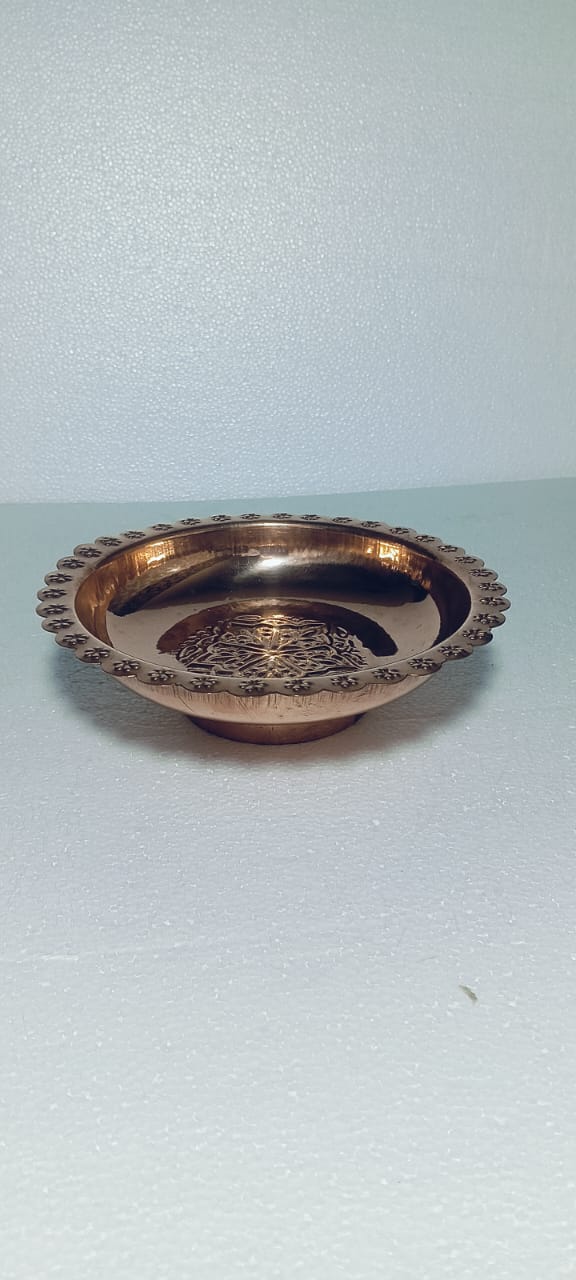
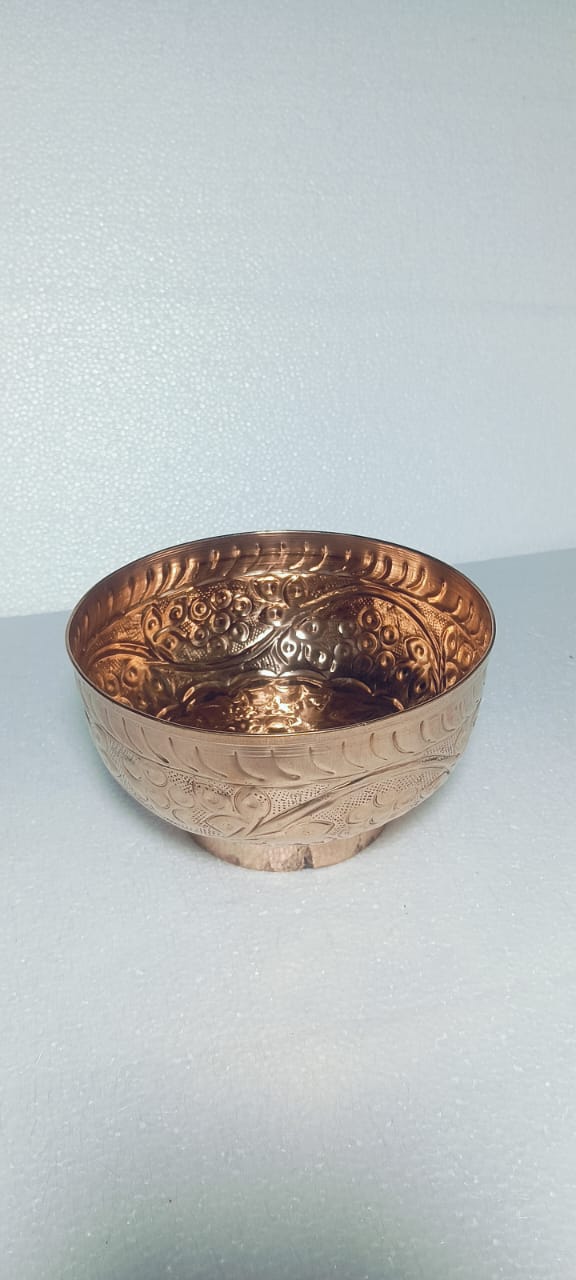
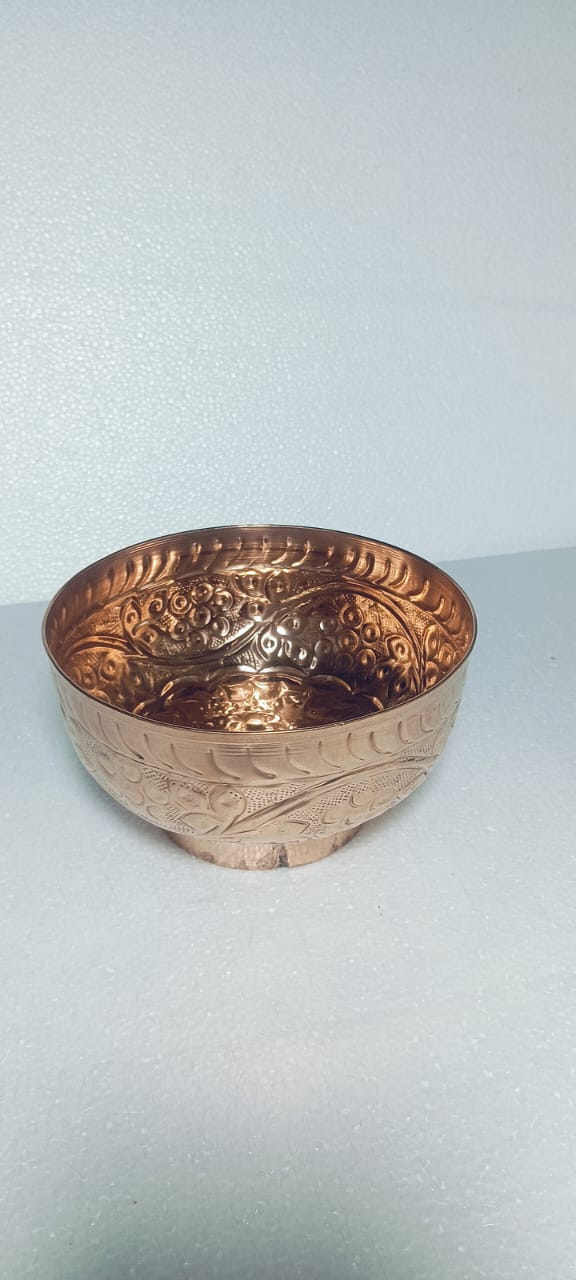
Copper Bowl
Original price was: ₹450.00.₹385.00Current price is: ₹385.00.
Material : Copper
Height :8 inch
Top Diametre : 14 cm
Weight : 240 gm
Finishing : Polished
Description
About Copper Bowl:
Copper Bowls: Beauty, Tradition, Uses & Care
Copper has a long, storied place in human craftsmanship and daily life. Among its various forms, copper bowls hold a special place—combining functionality, aesthetics, and cultural value. This article explores everything about copper bowls: their history, advantages and drawbacks, how to choose a good one, practical uses, care & maintenance, safety tips, and ideas for presenting them attractively on a website.
What Is a Copper Bowl?
A copper bowl is a vessel made largely of copper metal. It may have simple smooth walls or decorative texture (hammered, embossed, engraved), may be polished or matte, sometimes lined inside (with tin, stainless steel, or food‑grade coating) to minimize reactivity with food or moisture. Sizes can range from small ones for spices, sauces or offerings, to large ones for mixing, serving, or display. Shapes vary: shallow or deep, wide or narrow, round or oval.
History & Cultural Significance
- Copper is one of the oldest metals used by civilizations. Its use goes back thousands of years—in the Indus Valley, ancient Egypt, Mesopotamia, and later in Asia, Europe, and elsewhere.
- Copper bowls have been used traditionally for serving food, storing water, offerings in religious rituals, and decorative purposes. In South Asia (India, Nepal, Bangladesh), copper vessels are used in Ayurveda, rituals, and daily life. For example, water stored in copper has been considered “tamra jal” and believed to have health benefits. (Hindustan Times)
- Regions known for skilled copper craftsmanship (metalworking, coppersmiths) produce bowls with artistic detailing—hammered finishes, ornate designs, sometimes local patterns. This craftsmanship is part of cultural heritage. (Wikipedia)
Advantages & Potential Benefits
Copper bowls offer multiple advantages—some aesthetic, some practical, others traditional or health‑related.
- Aesthetic Appeal
The warm reddish‑gold tone of copper is striking. Over time it develops a soft patina if unpolished, which many find beautiful and characterful. Hammered or textured finishes catch light in interesting ways. They make fine decorative pieces. (coppersmithcreations.in) - Thermal Properties
Copper conducts heat well. Bowls heat up and cool down relatively quickly. For cold foods like salads, desserts, fruits, the copper bowl helps retain cooler temperature (if chilled). For warm foods, it can retain warmth briefly (though care is needed). - Traditional / Health Beliefs
- In Ayurveda and traditional systems, copper is believed to have antimicrobial properties; storing water in copper bowls or vessels is thought to purify it and improve digestion. (Herzindagi)
- Drinking “tamra jal” (water stored in copper) is seen to balance the body’s doshas (Vata, Pitta, Kapha) and offer other wellness benefits. (Hindustan Times)
- Versatility
Copper bowls are multipurpose: mixing, serving, storing, decoration, ritual offerings, etc. Smaller bowls may hold spices, nuts, jewelry; larger ones may serve food, fruits, or even act as centerpieces. (coppersmithcreations.in) - Longevity
If well‑made and properly cared for, copper bowls can last many years. Copper is relatively durable, though it requires maintenance to prevent tarnish or corrosion. (coppersmithcreations.in)
Limitations & Things to Be Aware Of
Using copper bowls is not entirely without drawbacks. Here are things to consider.
- Reactivity & Taste Issues
Copper reacts with acidic foods or liquids (e.g. tomatoes, vinegar, citrus) and may leach copper ions. This can affect taste and possibly health. If the bowl is unlined, such effects are more likely. (NDTV Food) - Tarnishing / Oxidation
Copper exposed to moisture, air, and certain chemicals oxidizes. Surfaces may darken, get spots, or develop a greenish patina (verdigris). While some find patina attractive, excess oxidation can damage appearance and safety. (coppersmithcreations.in) - Cleaning & Maintenance
Requires more hands‑on care versus stainless steel or ceramic. Must clean regularly; avoid leaving moisture; avoid harsh detergents or abrasive scrubbers. Polishing may be needed to maintain shine. (coppersmithcreations.in) - Cost & Craftsmanship Variation
High‑quality handmade bowls cost more. Imperfect finishes, thin copper, poor lining or joining reduce usefulness. Some bowls may have defects. It’s important to choose well. - Safety
Over‑use of unlined copper with certain foods, or improper cleaning, may lead to excessive copper ingestion, especially in vulnerable people (those with certain health conditions). It’s safer if copper bowls are lined or used properly. (The Indian Express)
How to Choose a Good Copper Bowl
If selecting copper bowls (for home, for sale, or for content), these features help determine quality and suitability.
- Material & Lining
Decide whether lined or unlined. Lined bowls (with food‑grade tin or stainless steel) reduce risk of reactivity while still offering the look. Unlined bowls offer traditional feel but need more care and careful use. - Thickness & Craftsmanship
Thicker copper will be sturdier, less prone to deformation, and more durable. The finishing (smooth or hammered) should be even; edges should be smooth; joints (if handles or decorative parts) should be well‑made. - Size & Shape
Capacity should match intended use. Wide shallow bowls for salads or display; deep bowls for soups or mixing. Consider how easy it is to clean inside. - Finish & Design
Choose between polished (shiny) or matte/hammers etc. A rubbed/polished finish shows fingerprints easily; hammered textures help hide small imperfections. Decorative engraving or embossing may add value. - Purpose & Safety
If used for food serving, ensure lining or appropriate finishing. Think about whether the bowl will be used for acidic foods. If for decorative or ritual use, you may have more flexibility. - Authenticity & Origin
Knowing the artisan or region can help. Traditional places of copperware art (like places known for coppersmithing) tend to produce pieces with character.
Practical Uses of Copper Bowls
Here are many ways copper bowls can be used in everyday life and special occasions:
- Food & Serving
- Serving salads, fruit, appetizers
- Holding sauces, dips, chutneys
- Serving desserts or cold treats
- Presenting breads or rolls
- Mixing & Baking
In many culinary traditions, copper bowls are prized for whisking egg whites or making meringues. Copper helps stabilize the foam in egg whites, leading to firmer peaks. Baking or pastry work benefits. (Coppersmith Creations) - Ritual / Spiritual Use
In religious ceremonies or offerings (puja etc.), copper bowls are used to hold water, milk, flowers, prasad (offering food). They are viewed as auspicious and pure. (The House of Ram) - Decorative Objects
- Centerpieces: filled with fruits, potpourri, floating candles
- Display on shelves, consoles, tables
- As accent pieces in rustic, vintage, or modern interiors
- Health / Wellness Use
Storing drinking water overnight (tamra jal) in copper bowls/vessels is a traditional practice believed to help with digestion, immunity, skin. Use properly and clean thoroughly. (Hindustan Times) - Storage of Dry Items or Small Objects
Small copper bowls can be used to store nuts, spices (dry), jewelry, keys, coins—items that are dry and non‑acidic.
Care & Maintenance
To preserve beauty, functionality, and safety, copper bowls require proper care. Below are recommended practices.
Cleaning Routine
- Wash by hand using warm water and mild soap. Avoid leaving food residue or water for long periods.
- Use a soft sponge or cloth; avoid steel wool or harsh abrasives which scratch the metal or damage lining.
Removing Tarnish & Polishing
- Natural/DIY cleaners: lemon or vinegar with salt; paste of baking soda and lemon; these help remove tarnish. After applying, rinse thoroughly.
- Commercial copper polishes are available; ensure they are food‑safe if the bowl is used for food.
- For bowls that are lined inside, be gentle so you don’t damage lining material.
Drying & Storage
- Always dry completely after washing to avoid water spots or moisture that causes oxidation.
- Store in a dry place; avoid humid or damp storage.
- If stacking multiple copper bowls, place soft cloth or protective layer between them to avoid scratches.
Avoiding Harmful Uses
- Do not store acidic or salty hot food/liquids in unlined copper bowls for long. The acid/salt can react with copper. (NDTV Food)
- Avoid heating unlined copper bowls with acidic substances.
- Avoid dishwasher use (unless explicitly labeled safe) because strong detergents and hot water can damage copper finish and cause oxidation.
Safety Considerations
While copper bowls are generally safe with proper care, keep these points in mind:
- Use lined bowls when dealing with food that is acidic or if storing food/liquids for longer times.
- Be aware of potential for copper leaching: in small amounts copper is trace‑essential, but too much intake over time is not desirable.
- Individuals with certain health conditions (e.g., Wilson’s disease) or sensitivity to copper might need to avoid excessive exposure.
- Do not ingest old or heavily tarnished copper (verdigris) or allow food to come into contact with copper surfaces that are flaking, corroded, or discolored green/brown.
Styling Tips & Website Content Ideas
If you are writing content for a website selling or featuring copper bowls, here are angles / styles / ideas to emphasize.
- Heritage & Craftsmanship: Talk about the traditional craft, where it comes from, artisan techniques (hammered/plated/engraved).
- Health & Wellness: Emphasize traditional health beliefs (tamra jal, antimicrobial properties) but also clarify safe use and limitations.
- Design Style: Highlight finishes: polished vs hammered vs matte; shapes and sizes; decorative vs functional; lining or not.
- Photography & Presentation: Show copper bowls with interesting content: fruits, salads, decorative items, water, etc. The shine, reflections, texture become visible with good lighting.
- Care Instructions: Provide clear guidance so customers know how to keep the bowl in good shape. This builds trust and reduces complaints.
- Multiple Uses: Show versatility: as serving piece, mixing bowl, ritual vessel, decorative accent. This expands appeal.
- Gift Appeal: Copper bowls can be great gifts—emphasize packaging, sets, matching pieces (bowls + jug + glasses), etc.
Sample Descriptive Paragraph for Product Listing
Here’s a sample description you could adapt for a product page or catalog:
“This elegant copper bowl, handcrafted from high‑grade pure copper, features a hammered finish that catches the light in soft reflections. With a generous capacity of 1.5 liters and a gently curved interior, it is ideal for serving salads, storing fresh fruit, or as a striking centerpiece on your dining table. The smooth, rolled rim ensures comfortable handling, and the base is flat and stable. Whether used in kitchen, ritual, or decorative display, this bowl combines traditional craftsmanship with practical design. Includes food‑safe lining inside (or, if unlined, with usage instructions) and care guide to preserve its radiant shine.”
Conclusion
Copper bowls are more than mere utensils—they are a fusion of art, tradition, utility, and wellness. When chosen thoughtfully and cared for properly, they become heirloom quality—serving food, enhancing décor, supporting rituals, and carrying cultural meaning. For a website, emphasizing their beauty, versatile use, health‑related traditions (with clarity on safety), and care instructions will help users or customers appreciate copper bowls fully.
Related products
-
- Sale!
- Copper Bowl
Copper Fruit Bowl
- Original price was: ₹410.00.₹325.00Current price is: ₹325.00.
- Add to cart
Reviews
There are no reviews yet.