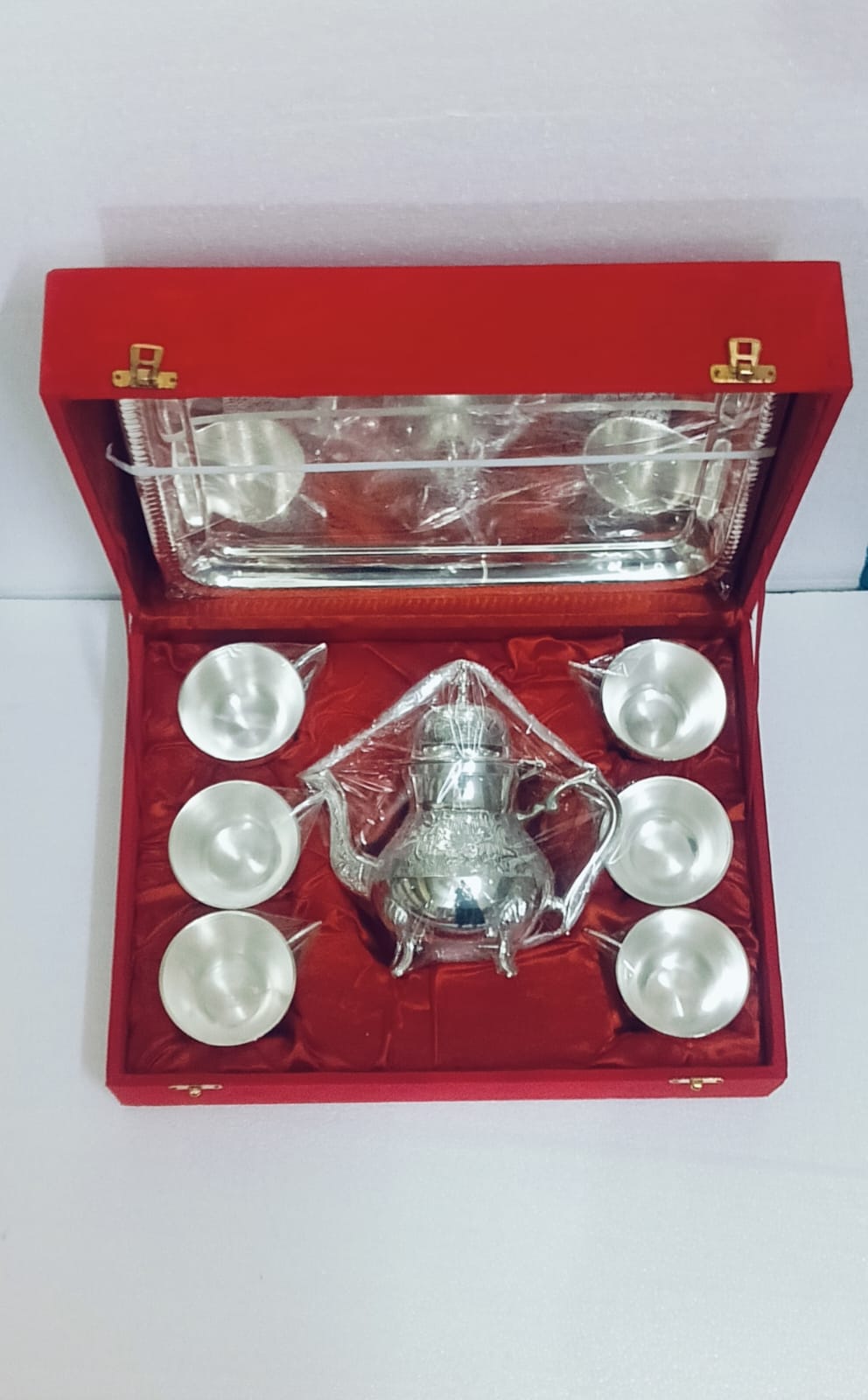
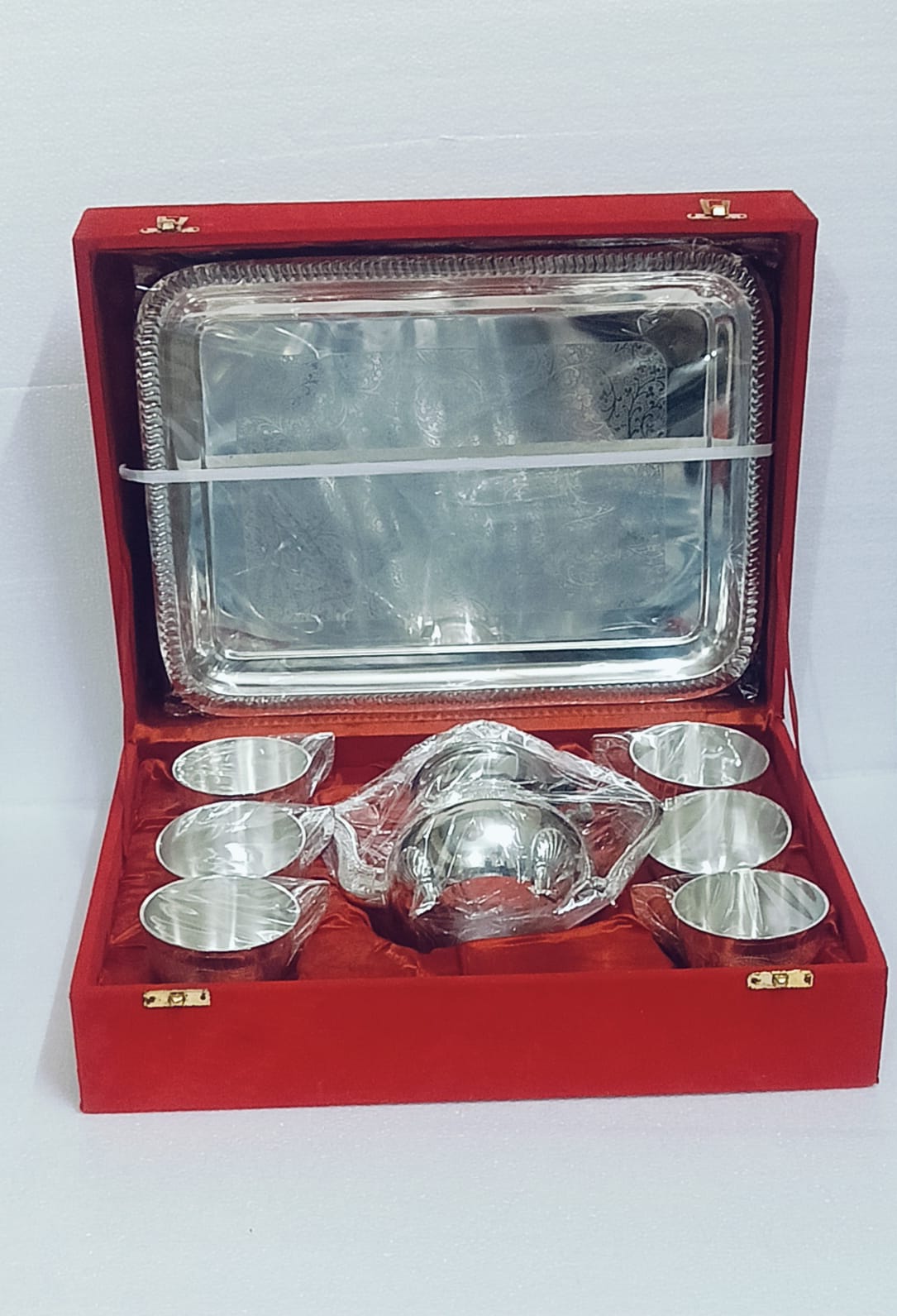
German Silver Teapot Set
Original price was: ₹2,300.00.₹2,200.00Current price is: ₹2,200.00.
Material : Brass
Finishing : Silver
Type : Gift item
Description
About German Silver Tea Pot Set:
A German silver teapot set evokes images of elegance, timeless design, and refined tea rituals. But unlike what its name might suggest, “German silver” does not literally mean pure silver. In this article, we’ll explore what German silver is, ho german silver teapot sets made from it are crafted, their historical and aesthetic appeal, practical considerations, tips for use and maintenance, and how to evaluate their value and authenticity.
What Is German Silver?
“German silver” (also called nickel silver, maillechort, or alpaca silver) is an alloy typically composed of copper, nickel, and zinc. It mimics the appearance of sterling silver (i.e. the bright white sheen) but contains no elemental silver. Because of its nickel content, it has good strength, hardness, and corrosion resistance (though it can tarnish or oxidize over time).
The term “German silver” is somewhat historical: the alloy was developed in Western Germany in the 19th century and became popular in Europe for cutlery, tableware, and decorative metalwork. Because it costs less than pure silver yet looks similar, it found many uses in decorative arts and functional objects.
In many antique teapot sets, you may also find silver-plated versions, where a thin layer of silver is plated over a base metal (often copper or brass). These are different from solid German silver items, but sometimes the term “German silver teapot set” is loosely used to include silver-plated wares from Germany. (For example, a German silver‑plated tea & coffee set from WMF, circa 1905, is known in the antique trade. ) (pamono.eu)
Because “German silver” doesn’t denote pure silver, a teapot set labeled as German silver tea pot set may not have silver’s full thermal and chemical properties—but it delivers a balance of appearance, cost, and practical usability.
Historical & Artistic Significance
German craftsmanship in metalwork has long been associated with precision, ornamentation, and artistry. In the late 19th and early 20th centuries, cities like Hanau became centers for silver and silver‑alloy work, producing intricately decorated tea and coffee services. Some pieces bear hallmarks such as “800” (denoting 80 % purity if genuine silver), crescent and crown symbols, or maker’s stamps from firms like Wilhelm Binder. (Christie’s)
A famous example is a German silver four-piece tea/coffee service on a tray from Hanau, circa 1900. The set comprises a coffee pot, teapot, sugar bowl, cream jug, and the tray. Decorative elements such as fluted bodies, domed lids, bird‑head spouts, scroll handles, floral engravings, and dolphin finials often enhance the pieces. (Christie’s)
Another example is the German silver three‑piece set by Gebrüder Friedländer of Berlin, with detailed Rococo scrollwork and shell motifs, dated 1896–1900. (Christie’s)
Collectors prize these sets not only for their utility but also for their decorative artistry. Many are passed down as heirlooms or displayed in cabinets as works of art.
Components & Design Features of a German silver teapot sets
A typical German silver (or silver‑plated German style) teapot set might include:
- Teapot / Coffee pot (main vessel)
- Creamer / milk jug
- Sugar bowl with lid
- Tray (sometimes)
- Extras such as tongs, tea caddy, or additional small serving pots
Design features frequently seen:
- Engraved, chased, or embossed ornamentation: floral, scrollwork, crests, or foliate motifs.
- Finials and handle details: lids may carry finials (e.g. dolphin, urn, floral) and handles may have insulating materials (wood, tortoiseshell, ivory, or resin) to remain cool when pouring.
- Spouts: elegantly curved, sometimes terminating in stylized shapes (bird heads, animal forms).
- Hallmarks: stamps like “800”, a crescent and crown, maker’s initials or city marks (e.g. “Hanau”, “Berlin”) help with dating and authentication.
- Footed bases: pedestal or ornate feet elevate the vessels, sometimes with decorative supports like dolphins or scroll motifs.
When used in a set, symmetry and harmony of design across all pieces is considered a mark of quality. Matching styles and consistent ornamentation across the teapot, cream, sugar, and tray make the set more desirable.
Advantages & Limitations German silver teapot sets
Advantages
- Cost-effective beauty
German silver tea pot set is more affordable than pure silver but still yields a pleasing silvery aesthetic. - Durability & stiffness
The alloy offers higher hardness than plain silver, reducing denting or deformation in everyday use. - Corrosion resistance
Nickel-rich alloy resists corrosion in many environments, though it still tarnishes under certain conditions. - Decorative versatility
Easier to engrave, emboss, or chase, allowing ornate decoration.
Limitations
- No inherent thermal properties of silver
Because it isn’t pure silver, it doesn’t conduct heat exactly like silver. This can impact how quickly it transfers warmth or cools. - Potential for tarnish or nickel oxidation
Over time a mild oxidation (dullness, darkening) can appear, especially in humid or sulfurous environments. - Risk of plating wear (for silver-plated variants)
If the piece is silver-plated over German silver teapot sets or other metal, the silver layer may thin or wear off, exposing the base alloy. - Weight / heat on handles
If handles or lids are of the same metal, they may heat up. That is why insulating materials (wood, ivory, resin) are often used in older sets. (Wikipedia) - Not truly precious metal
As German silver contains no silver, its precious‑metal value is limited—to what the base metals are worth and to its decorative or historical worth.
How to Use a German Silver Teapot Set
When using a German silver teapot set for brewing or serving tea, keep the following in mind:
- Preheat: Rinse the teapot with hot (not boiling) water to warm the vessel. This German silver teapot sets prevents thermal shock and avoids cooling the brewed tea too quickly.
- Avoid overly harsh cleaning: Do not scrub aggressively or use acidic cleaners (lemon, vinegar) directly on delicate finishes or engraved surfaces.
- Use a tea infuser or strainer: To avoid stray leaves scratching the interior.
- Avoid boiling liquids for prolonged exposure: While a few minutes with boiling water is generally okay, continuous high-heat exposure may stress soldered joints or plating.
- Dry thoroughly after use: Water left inside may lead to spotting, corrosion, or tarnish.
- Polish sparingly: Use a gentle nonabrasive silver or metal polish if necessary, but avoid over-polishing, as repeated polishing can reduce thickness of silver plating or wear delicate engraving.
An anecdotal tip from tea lovers: before using an old silver-like tea set, inspect the interior. If there’s a green or heavy bronze-green corrosion (not just surface tarnish), it may mean internal degradation. In that case, many prefer to keep the set for display only. (In one user’s experience:
“Check inside first … many nice silver tea sets have corroded interiors … if you see green or bronze tarnish … save it for décor, not use.”) (Reddit)
Care & Maintenance
To preserve the shine, finish, and integrity of a German silver teapot set, follow these practices:
Regular Cleaning
- Use a soft, lint-free cloth or microfibre cloth.
- Mild dish soap and warm (not boiling) water is generally safe.
- Rinse thoroughly to remove residue.
- Dry immediately and completely to prevent water spots.
Removing Tarnish
- Choose nonabrasive polishes or specialized silver‑alloy cleaning pastes.
- Alternatively, a gentle homemade paste of baking soda + mild dish soap can work for light tarnish.
- Apply with a soft cloth in gentle circular motion, avoid heavy pressure on engraved areas.
- Rinse fully and dry after polish.
Preventive Measures
- Store in a dry, low-humidity area. Use silica gel packs or anti-tarnish strips.
- Wrap pieces individually in soft cloth or acid-free tissue to prevent scratching or contact between metal surfaces.
- Minimize exposure to sulfur compounds (e.g. rubber, wool, air fresheners), which accelerate tarnish.
- Use the set periodically—ironically, gentle use helps reduce deep tarnish compared to long idle storage.
Repairs and Professional Restoration
- If solder joints loosen, crests or finials get bent, or silver plating thins, consider a skilled metal restorer.
- Avoid attempting heavy repairs yourself unless versed in metalwork.
- For silver-plated pieces, replating is possible but costly; ensure that the restorer matches original alloy and appearance.
Criteria to Evaluate Authenticity & Value
When assessing a German silver teapot set (for purchase, appraisal, or showcase), consider these criteria:
- Hallmarks & maker’s marks
Genuine pieces often bear stamps like “800”, a crescent & crown, initials of the silversmith or city name, or assay marks. Sets from Hanau, Berlin, and firms like Binder are documented in auctions. (Christie’s) - Consistency of design
All pieces in the set should share style, ornamentation, and proportions. - Condition & wear
Look for dents, scratches, plating wear, or corrosion. Light surface scratches are expected, but deep wear especially around spouts, rims, or handles reduce value. - Interior state
The inner surfaces should be relatively intact and clean. Heavy corrosion or greenish patina may indicate internal degradation. - Weight and feel
A well-made set will feel solid (not tinny or light) and well-balanced in hands. - Provenance / documentation
Auction catalogs, certificates, or seller history can add confidence and value. - Rarity and design appeal
Unusual decorative motifs, rare maker’s signatures, or large complete sets command premium prices in the collector market.
For instance, Christie’s has offered several German silver teapot/coffee sets (e.g. a Hanau four-piece fluted set) in their decorative arts auctions. (Christie’s) Those catalog listings help compare designs, markings, and auction prices to present-day offerings.
Modern & Decorative Uses
Even when not used daily for brewing tea, German silver teapot sets make captivating decorative pieces:
- Display in glass cabinets: their metallic sheen, luster and ornamentation catch light and draw attention.
- Centerpiece or tabletop accent: used as a floral vase (insert a glass liner inside) or as part of a vintage-themed tea setting.
- Photography or staging props: in period decor, heritage restaurants, luxury cafes or for editorial shoots.
- Heritage or collectible item: passed down within families, purchased by antique collectors or museums.
If using for serving today, opt for sets with intact interiors and minimal wear. You may also pair them with modern, removable food-safe liners (glass or porcelain) if you wish to protect the metal while brewing.
Sample Descriptive Paragraph (for Website Use)
Here’s a sample description you might use or adapt on your website:
“This exquisite German silver teapot set features a curvaceous teapot, matching sugar bowl and creamer, all resting on a delicately chased tray. Each piece is adorned with floral scrollwork and elegant finials, evokes turn-of-the-century German silversmith tradition, and bears maker’s marks indicating its provenance. The warm patina enhances its antique charm. Whether used for tea rituals or displayed as a centerpiece, this set blends utility and artistry in equal measure.”
Feel free to tweak details (maker, design, motifs) based on the specific set you showcase.
Related products
-
- Sale!
- Kitchen
Copper Plate
- Original price was: ₹270.00.₹250.00Current price is: ₹250.00.
- Add to cart
-
- Sale!
- Kitchen
Copper Thali
- Original price was: ₹1,450.00.₹1,350.00Current price is: ₹1,350.00.
- Add to cart
-
- Sale!
- Kitchen
Copper Serving Donga
- Original price was: ₹850.00.₹750.00Current price is: ₹750.00.
- Add to cart

Reviews
There are no reviews yet.